News
GEAR Tool for Gender Equality Plans in academia and research organisations.
EIGE, the European Institute for Gender Equality and the European Commission have…
New GENDER-NET ERA-NET reports now available !
The new GENDER-NET reports are now available online and can be downloaded here: …
Events
Project meetings
EU-conferences
28.11.2017 – 29.11.2017
Final Conference TRIGGER
Maxime Forest Guest speaker, presentation on EGERA GEPs, instruments and challenges…
National conferences
27.09.2017 – 28.09.2017
Arbeitstagung der „Konferenz der Einrichtungen für Frauen- und Geschlechterstudien im deutschsprachigen Raum (KEG)"
Die nächste Arbeitstagung der „Konferenz der Einrichtungen für Frauen- und…
28.09.2017 – 30.09.2017
Tagung „Aktuelle Herausforderungen der Geschlechterforschung“
Im September 2017 findet an der Universität zu Köln in Kooperation mit GeStiK unter…
Workshop on Gender Equality Training: methods and standards for effective interventions
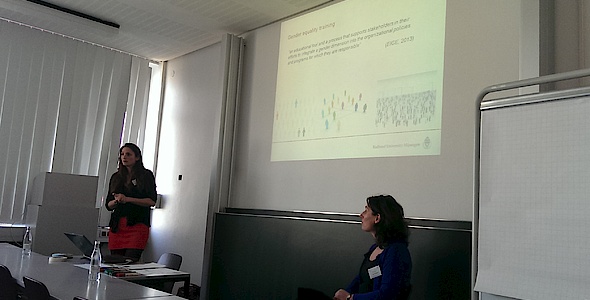
Workshop on Gender Equality Training: methods and standards for effective interventions
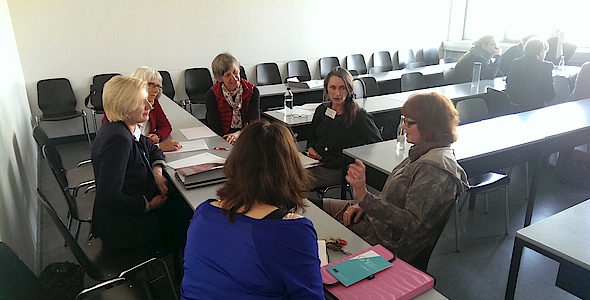
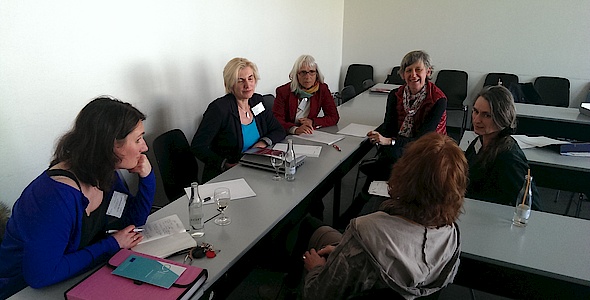
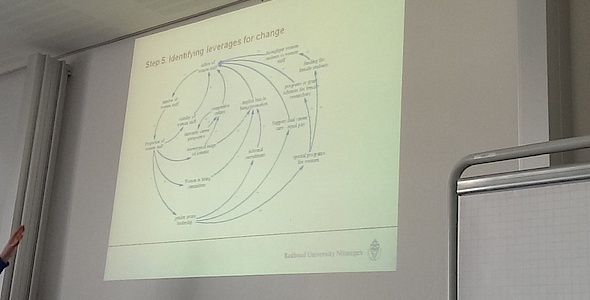
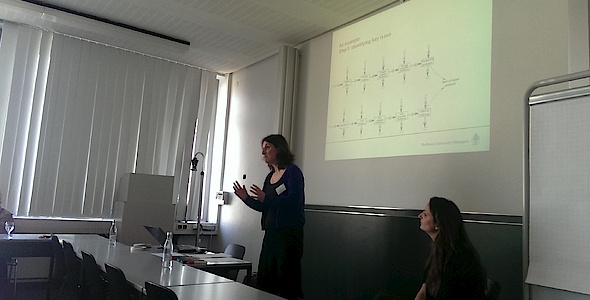
The workshop took place at the 19th of March 2015 at University of Vechta (Germany) in the frame of the annual conference of the association of "Women’s and Gender Equality Officers at Universities in Lower Saxony" (LNHF). Gender equality training has become one of the most applied strategies to support gender mainstreaming and support gender equality in organizations. Gender equality training offers a potential for effective social changes through involving stakeholders, enabling them to incorporate a gender perspective into organizational policies. This workshop discusses how training activities vary widely with regard to their objectives, audiences, content, methodologies, trainers, levels of stakeholder involvement and impact. The workshop leaders, dr. Inge Bleijenbergh and dr. Pleun van Arensbergen from Radboud University Nijmegen, the Netherlands, have experience with Gender Equality Training in various EU funded gender equality research projects. They argue that training method directed at a targeted audience and high levels of stakeholder involvement have potentially the largest impact. As the quality of gender training sets the boundaries of its potential, they support the development and promotion of quality standards with regard to training methodologies and content. Via participatory methods the workshop participants are invited to discuss standards for gender equality training programs and trainers.
Submitted by egera-admin on 23.03.2015 – 12:17 pm